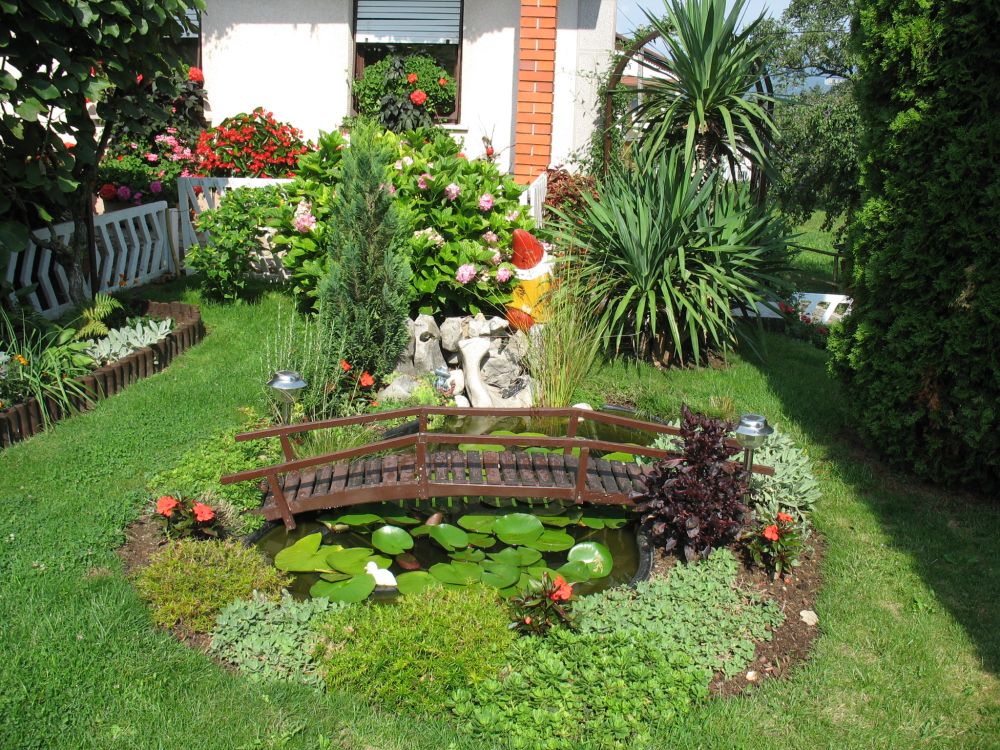
What in your garden is truly wild?
At its heart, the sustainable gardening movement is about creating gardens that look and act more like nature. Or at least an interpreted form of it. But how many of our gardens actually let wildness in? Do we allow plants to self-seed and roam freely? Are happy accidents permitted, or do we quickly correct them and steer the garden back on course?
The concept of wildness in gardens is not new. But the topic is hotter than ever these days. Author, lecturer, photographer, and designer Rick Darke has recently revived William Robinsons classic tome
The Wild Garden. William Robinson (1838-1935) introduced a revolutionary book in 1870 that advocated an authentically natural approach to planting design. Now Rick Darke has republished this timeless work, complete with Darkes own photographs and preface.
No one in America has Rick Darke’s eye for plants in their natural habitat. Darke is one of the few planting photographers today to get beyond the horticultural close up and show plants living and growing in their natural habitats. The result is dramatic. Darke’s books are literally changing planting design in America, as his photographs serve as powerful inspiration to landscape architects and gardeners. Now those photographs come together with Robinson’s timeless text.
The Idea of WildnessThe concept of wilderness has inspired literature throughout the centuries. But Robinson dispenses with this mythic “wilderness” and offers a concept of wildness that is entirely relevant for creating a modern, ecological landscape ethic. The wild garden, “has nothing to do with the old idea of ‘Wilderness,’” writes Robinson in his preface. Robinson’s wild garden is not a pristine sanctuary untouched by human hands, but a place where human activity and natural ecology intersect. “Some have thought of it as a garden run wild,” Robinson says.
A New AestheticThat Robinson’s wild garden does not preclude human intervention, but welcomes it, makes it the starting point for any gardener serious about sustainable design. Chapter by chapter, Robinson richly describes strategies for arranging plants to work within naturally occurring plant communities. Robinson is a plantsman’s plantsman. Each chapter focuses on solid techniques for combining plants into various natural habitats, creating a hybrid space that is at once wild and man-made.
His combinations are poetic: double crimson peonies dotted through a field of native grasses; clumps of yellow alliums growing along a forgotten fenceline; or drifts of Lily of the Valley gathered in a sunny copse in the woods. His work describes a new aesthetic: a third nature where cherished cultivated plants intermingle freely with effervescent native vegetation.
In addition to the text, the book has almost a hundred exquisite drawings and engravings by British artist Alfred Parsons. The drawings bring to life Robinson’s vision, adding a moody richness that conceals as much as it reveals.
The Wild Garden is essential reading for any plant designer, landscape architect, or gardener. This textbook provides layers of inspiration and depth not offered by today’s coffee table books on planting. Since reading this book, my planting designs have been liberated, and I owe a debt to Robinson and Darke for expanding my imagination.